1999 Freiburg + Bernward, Germany
The birth of a European dream
1999: Freiburg + Bernward! The idea for the European Stone Festivals was born in 1997, when German stonemasons took part in the annual Rencontre de la Pierre, held at national level in Junas in southern France. Two years later, the European Stone Festival was brought to life by Bernward Fiedler, head of the Master School for Stonemasons and Stone Sculptors.
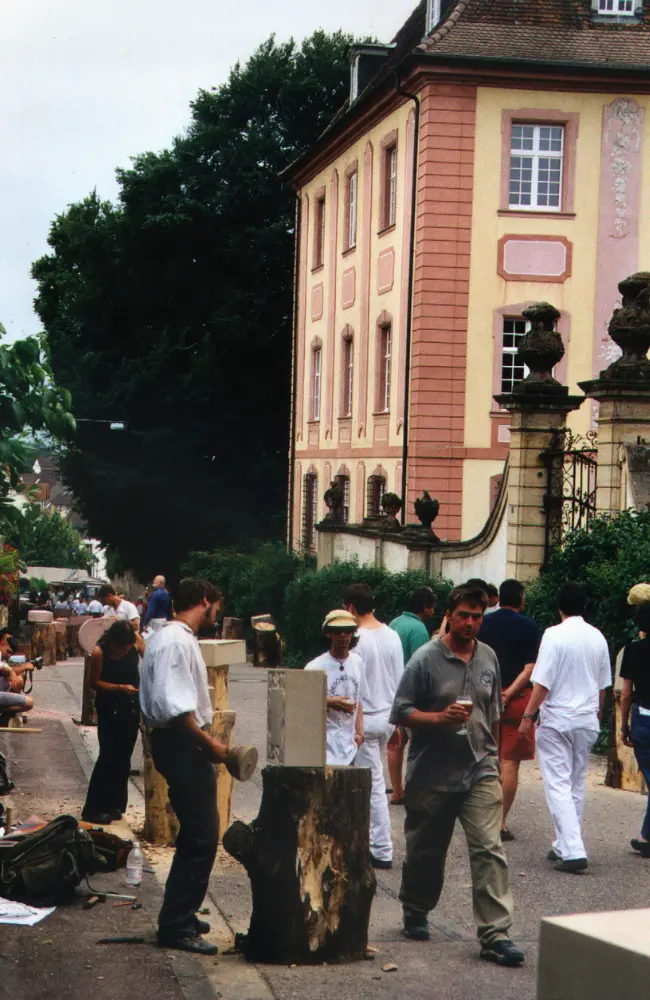
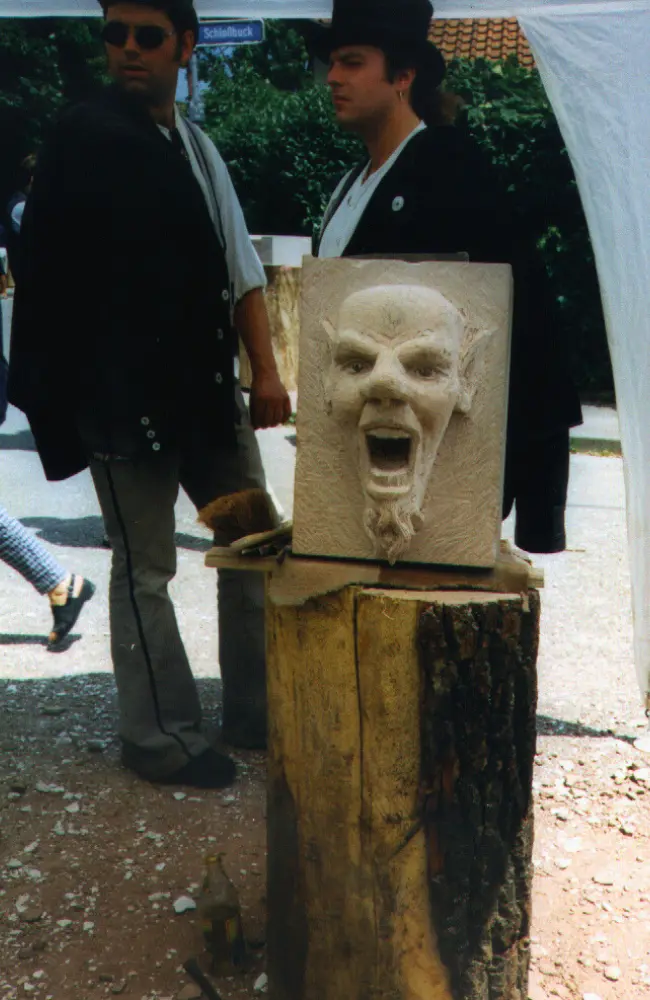
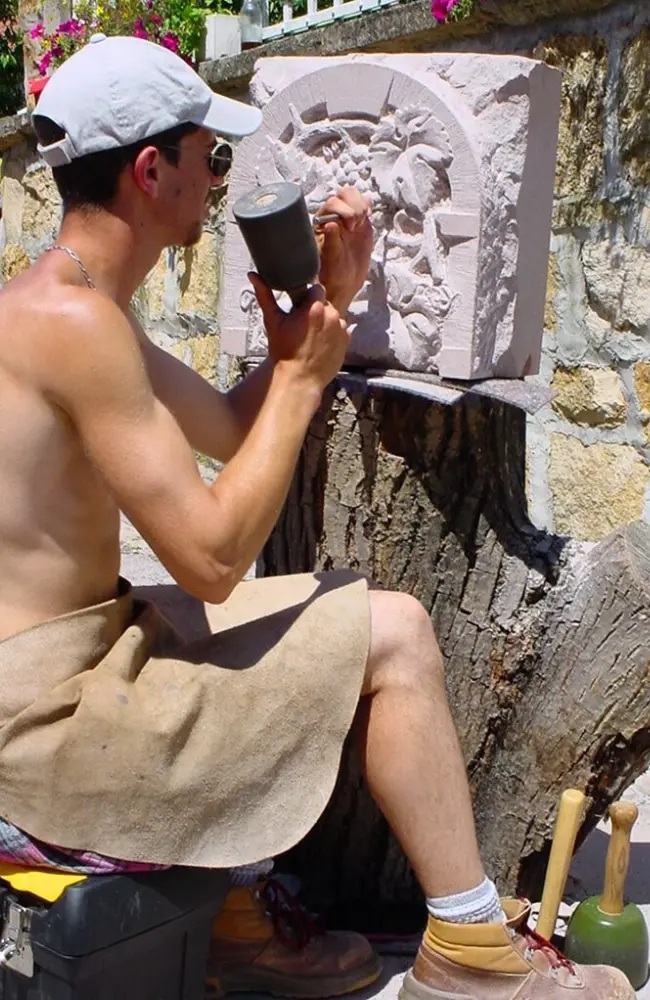
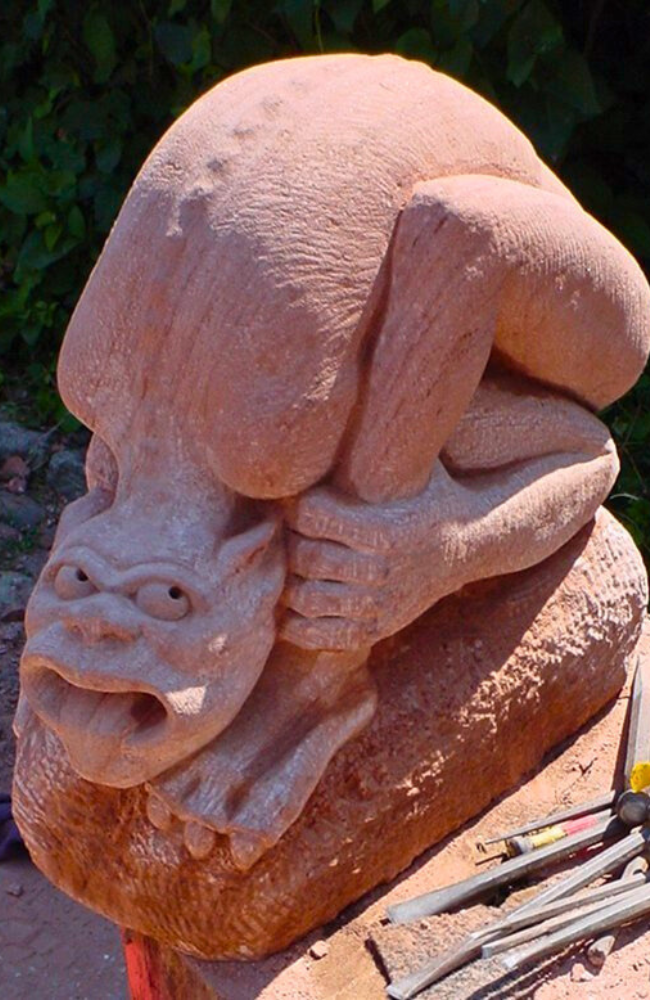
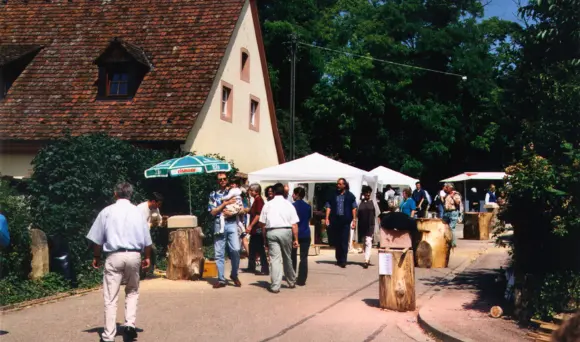
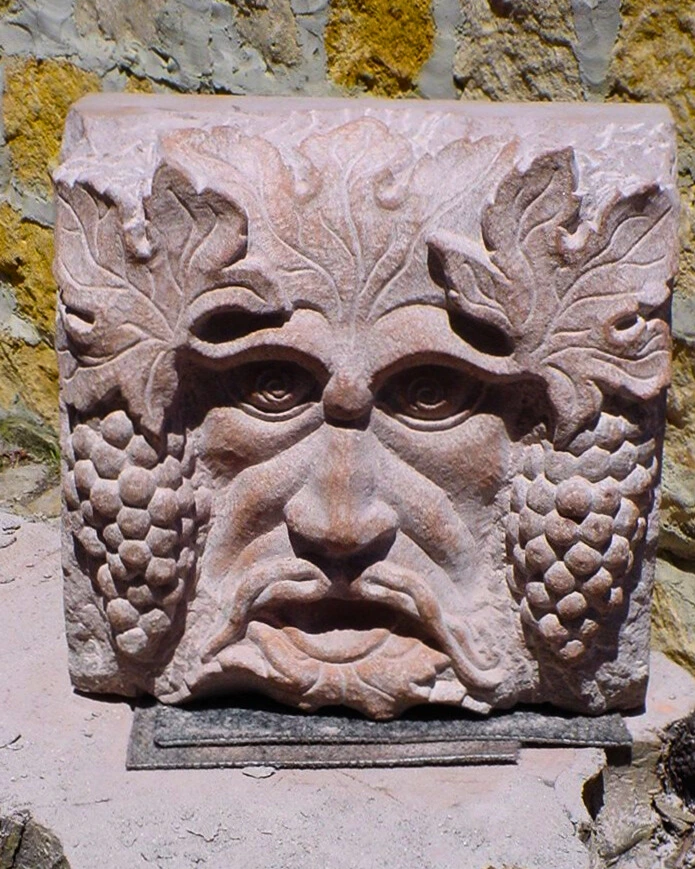
The first European Stone Festival took place from June 25 to 27, 1999, in Freiburg-Munzingen. In the picturesque wine- and asparagus-growing village, more than 90 stonemasonry and sculpture apprentices, as well as female and male journeymakers, came together to publicly demonstrate their skills against a historic backdrop featuring a Rococo palace and the medieval Gigili Tower. Throughout the entire weekend, the sounds of hammers and chisels drew thousands of visitors, who eagerly observed the creation of the works.
During the creative professional competition, the streets around the palace were transformed into a musical European art promenade. Accompanied by jazz, dixieland, Irish folk songs, and African rhythms, all local associations served wine and regional specialties. With great interest, competition participants from France, England, Switzerland, Croatia, Canada, and Germany observed the working methods and approaches of their international colleagues. The event marked a successful launch of a stone festival intended to tour Europe and conceived as a long-term initiative. In the context of European integration, it aimed to intensify the exchange of experience among the European member states.
Mutual familiarization with European cultures and the training structures that emerged from them is intended to facilitate access to the various European partners and to promote dialogue. The event seeks to create a forum for comparing standards among increasingly globalized training curricula within Europe, with the goal of harmonizing them. The festival aims to nurture the European idea beyond regional boundaries and to encourage cross-border collaboration among young artists.
Relive the 1999 festival
The birth of a European dream.